

The importance of parts washing
Summer planning in industrial and commercial environments often focuses on the obvious pressure points: working temperatures, ventilation, energy demand, staffing, equipment use and planned maintenance schedules. However, when temperatures rise and operational pressure increases, a slow or inconsistent cleaning process can become one more source of friction.
The UK’s recent weather patterns make this a practical issue. The Met Office confirmed that summer 2025 was the UK’s warmest on record. Its analysis also found that a summer as hot or hotter than 2025 is now around 70 times more likely than it would be in a natural climate without human-caused greenhouse gas emissions.
For industrial operators, the point is not to overstate the impact of summer heat. It is to recognise that warmer conditions can expose processes that are already less efficient than they need to be.
Summer Review
Seasonal planning gives businesses a useful opportunity to ask whether the current process is still right for the site.
Useful questions include:
- Are parts being cleaned properly first time?
- Are operators spending too long brushing, wiping or re-cleaning components?
- Is the cleaning result consistent between operators and shifts?
- Is the process suitable for the types of contamination being removed?
- Are solvent controls still appropriate for how the process is used today?
- Are residues, fluids and waste being managed in a controlled way?
- Could a different cleaning chemistry reduce effort, waste or reliance on solvent-heavy methods?
The aim is not to change for the sake of change. It is to understand whether the washroom is helping the maintenance process or quietly slowing it down.
Solvent Review
Solvents remain useful in some industrial cleaning applications. The issue is not whether solvents are always right or wrong. The issue is whether their use is still necessary, proportionate and properly controlled.
The Health and Safety Executive highlights the need to control solvent risks through measures such as ventilation, suitable protective equipment, washing facilities, training, supervision and monitoring. It also makes clear that workers need to understand whether products contain solvents and how controls should be used.
That makes solvent use a sensible area for periodic review, particularly where cleaning has become highly manual, odour is a concern, controls are difficult to maintain, or the process has not been reassessed for some time.
For some sites, the answer may be to improve the existing controls. For others, it may be to consider an aqueous or semi-aqueous alternative.
Why chemistry matters as much as equipment
Parts washing performance depends on more than the machine. The cleaning chemistry has to match the contamination.
Heavy greases, oil-based residues and hydrophobic contaminants can be difficult to remove consistently. If the chemistry is not strong enough, operators often compensate with time and effort. That may mean repeat cleaning, additional handling or more manual intervention.
If the process is too aggressive or difficult to manage, it can create a different set of operational, safety or environmental concerns.
This is why the best approach starts with the application. The part, the contamination, the required finish, the inspection process, the available space, the operator involvement and the environmental priorities all need to be considered before deciding which system is right.
Where semi-aqueous cleaning fits
Semi-aqueous cleaning can offer a practical middle ground for businesses dealing with stubborn contamination.
Metalwash’s semi-aqueous solution has been developed to bridge the gap between solvent cleaning power and the safety and sustainability benefits associated with water-based systems. It is designed for applications where purely aqueous systems may not always deliver enough strength on their own.
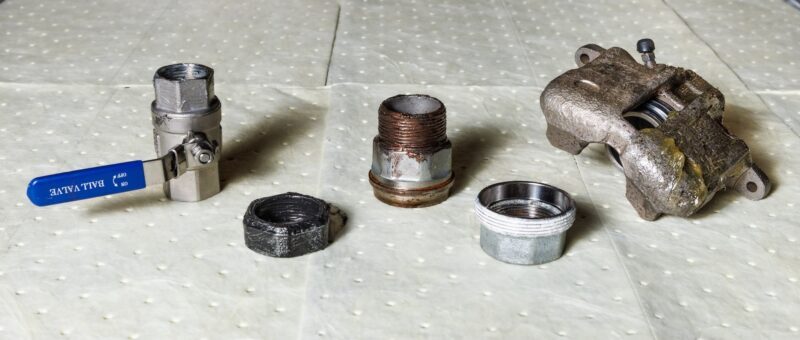
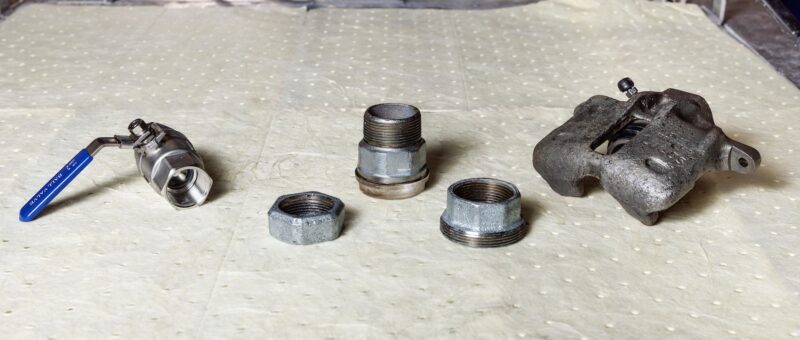
In Metalwash trials, the solution was tested against difficult contaminants including silicone grease, CV joint grease, Copper Cote, Liquid PTFE and heavy lithium grease. The trial results showed parts cleaned with no visible residue, no flash rusting and no degradation, with results achieved within five minutes across manual, high-pressure and automatic aqueous parts washers.
That does not make semi-aqueous cleaning the answer for every site. But it does make it a valuable option where businesses need stronger cleaning performance while also reviewing safety, sustainability and process control.
A more controlled washroom supports a more reliable operation
A well-matched parts washing process can support:
- cleaner components for inspection
- reduced unnecessary manual effort
- better consistency between users and shifts
- fewer repeat cleaning cycles
- improved control over residues, fluids and waste
- reduced reliance on solvent-heavy methods where suitable alternatives exist
- more efficient maintenance turnaround
Explore the Full Technical Insights:
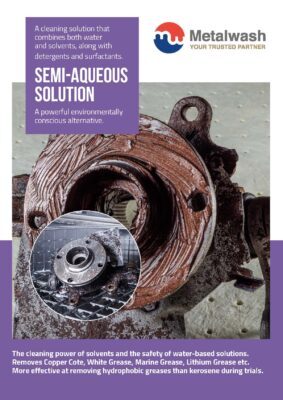
To fully understand how this solution can support your business, download the detailed Semi-Aqueous Solution Guide. It includes full test results, contaminant examples, and practical guidance on application.
Download the Semi-Aqueous Solution Guide.
Talk to the Experts.
Metalwash can help assess your current parts washing process, identify potential areas for improvement and advise whether aqueous, semi-aqueous or another cleaning method is the right fit for your application.
To discuss a pre-summer review of your parts washing process, contact sales@metalwash.co.uk or call 01285 762941.
